
When and where can thermoplastic elastomers replace silicone?
KRAIBURG TPE solutions as practical alternatives for bicycle parts, toys, and much more.
Versatile modification options and good recyclability on the one hand, and extremely high temperature and chemical resistance on the other. Nevertheless, we frequently receive inquiries about replacing silicone elastomers with TPE. But does this even make sense? Together with KRAIBURG TPE, we provide the answers. One of these is the new NEXT GENERATION Supersoft TPE—for sustainable applications in the soft hardness range of 30 to 50 Shore 00 or 45 to 70 VLRH. Easy to process in injection molding and even in 3D printing, Plastoplan Kunststoffe thus offers high-quality KRAIBURG TPE plastics as a recyclable alternative to silicone—for bicycle parts, fishing lures, toys, cosmetic packaging, gel or soft pads, and orthotics.
Pros and cons!
Essentially, comparing TPE with silicone rubbers or silicone elastomers is like comparing apples and oranges—in the end, they have very little in common. Although TPE and silicone are mostly soft, elastic materials with similar tactile properties, they differ fundamentally in their chemical composition. TPEs are thermoplastic elastomers, and silicones belong to the group of elastomers. This leads to significant differences in processing, technical product properties, sustainability aspects, and ultimately, areas of application.
Manufacturing: Costs, Health, and Carbon Footprint
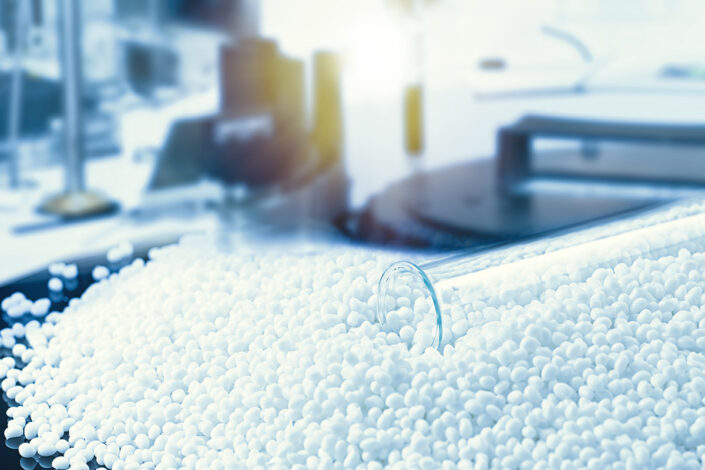
TPE refers to materials that combine the properties of elastomers with those of thermoplastics. TPE is soft like rubber but can be plastically deformed when heated, which enables processing via injection molding (including in two-component systems) and extrusion. There is no cross-linking, which results in several distinctive characteristics: modification options, a wide processing window, and suitability for multi-component applications. The thermoplastic processability of TPE also enables end-of-use and in-process recycling, which is why sustainability is a key consideration.
When compared to a TPE, a cross-linked material proves superior in certain areas. When high demands are placed on temperature and chemical resistance or on mechanical performance across a wide temperature range, many silicones offer better properties. TPE, on the other hand, is not only highly adaptable to a wide variety of operating conditions but is also reversible. Whether it’s flowability, adhesion to other plastics, or hardness and softness—even down to super-soft: TPE can be modified in an extremely versatile manner. Materials with high proportions of recycled content or bio-based raw materials (mass balance approach) are also possible.
In contrast, the majority of silicones are irreversibly cross-linked elastomers. While this structure limits the possibilities for modification, silicones are also often more costly and energy-intensive to manufacture than TPEs. When comparing global warming potential, TPEs have a significantly lower carbon footprint than silicones according to DIN EN ISO 14067. This alone makes them the more sustainable material choice.
Processing: Tooling costs, post-treatment, and adhesion
TPEs offer excellent processability, as they produce finished parts—in the truest sense of the word—directly from the mold, whereas silicone parts usually require aging, curing, or post-processing after the molding process. Furthermore, silicones adhere to plastics only to a limited extent. Hard/soft two-component applications therefore require a bonding agent or adhesive. TPE, on the other hand, can be easily modified depending on the material type and exhibit excellent, long-lasting adhesion even when directly bonded to polar plastics such as polyamides.
Application: Dominance, Overlap, and Softness
A key advantage of cross-linked silicones is their high elasticity over a wide temperature range (up to 250 °C), even under high mechanical cyclic loading. This is due to their covalently bonded 3D network, which also makes them highly resistant to chemicals, UV radiation, and weathering. This property profile benefits, for example, flexible baking pans and dispensing hoses in the food and chemical industries. TPEs, on the other hand, dominate a wide variety of multi-component applications, ranging from consumer goods to toys and sporting goods.
Due to their different unique selling points, the applications of the two materials are generally clearly distinct from one another. The few overlapping areas of application where alternatives might be considered are currently limited and include, for example, menstrual cups, baby pacifiers, profiles, and medical tubing.
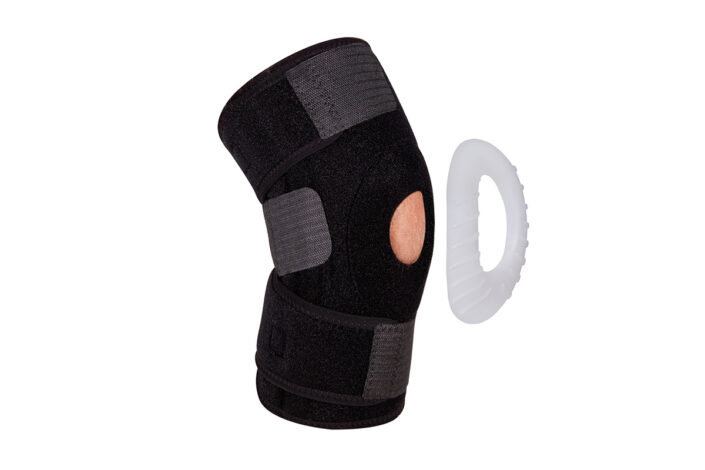
KRAIBURG TPE offers a solution—though not a perfect one—with NEXT GENERATION Supersoft TPE, designed for applications in the very low Shore (VLRH) hardness range. NEXT GENERATION Supersoft TPE meets the exceptionally high demands for softness and is available in pre-colored, translucent, and transparent grades. These super-soft products—with hardness levels ranging from 30 to 50 Shore 00 or 45 to 70 VLRH—can be processed using injection molding and even 3D printing. They provide a very pleasant, dry, and skin-like surface feel combined with high elasticity and good chemical resistance. The range of applications extends from bicycle parts and fishing lures to toys and cosmetic packaging, as well as gel or soft pads and orthoses. Learn more in the fact sheet.
Recycling: Circular economy, post-consumer and in-process recycling, certification
Unlike silicone, TPE applications are highly recyclable; certificates from the independent Aachen-based institute cyclos-HTP GmbH confirm the co-recyclability of various KRAIBURG TPE products in existing PP and HDPE streams within the recycling industry. Furthermore, KRAIBURG TPE’s portfolio already includes many proven, more sustainable alternatives containing post-consumer and post-industrial recycled content, thereby addressing the requirements of all target markets, including a material-dependent reduced PCF. For strictly regulated markets where these solutions do not apply, KRAIBURG TPE has been offering compounds with corresponding ISCC PLUS certification since early 2023. Through mass balancing, customers benefit from a lower PCF while maintaining the same processability and technical performance, and also ensure compliance with regulatory requirements. The certification ensures that the entire supply chain complies with strict environmental and social standards. Furthermore, thanks to the mass balance approach, compounds containing a certifiable ISCC PLUS component are fully equivalent to their fossil-based counterparts from a regulatory perspective.