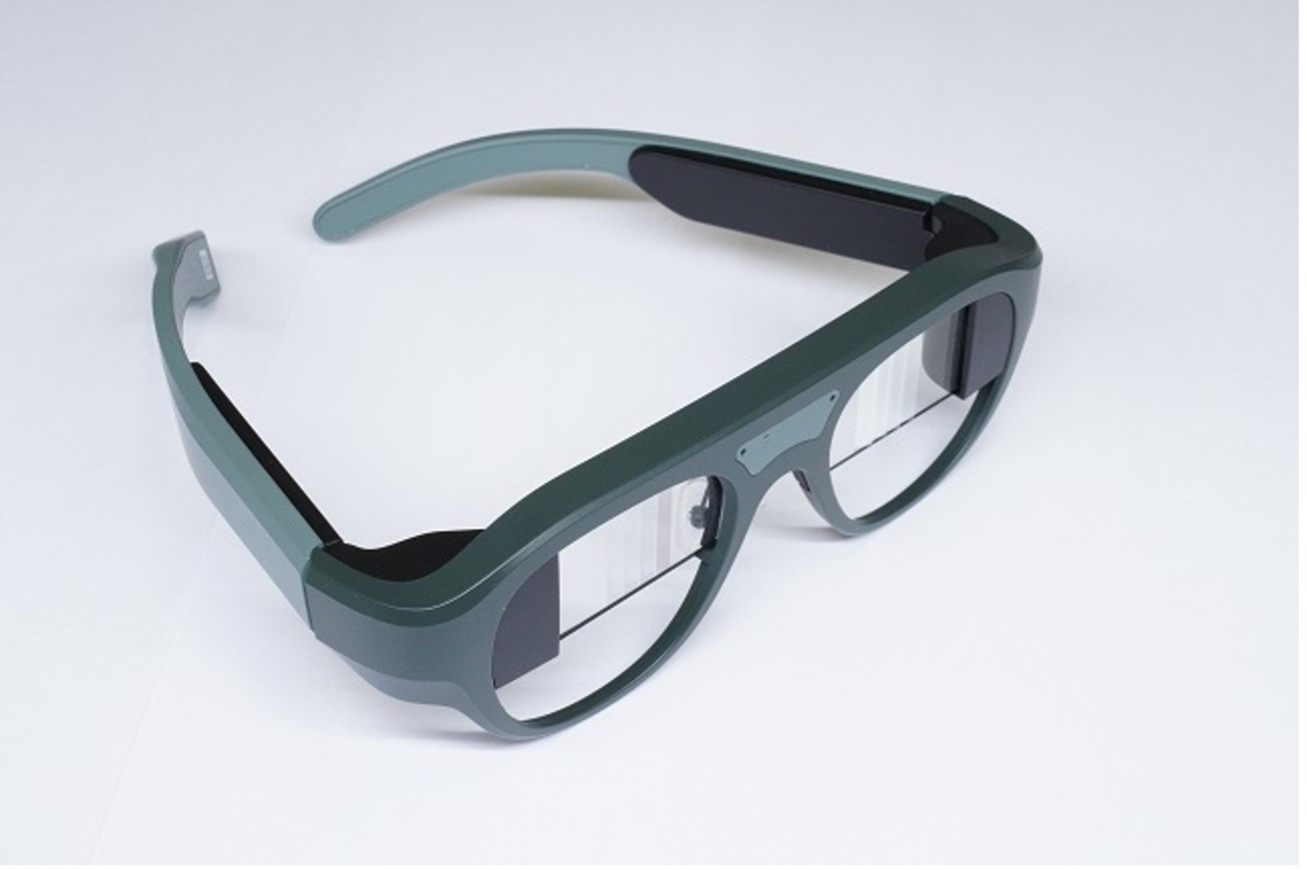
Lightweight Comfort for LLVision's Augmented Reality Glasses
With its new augmented reality (AR) glasses, Beijing LLVision Technology Co., Ltd. is taking communication to a whole new level. Artificial intelligence translates spoken words into text in real time and displays them on the screen. The glasses make it easy to overcome language barriers and hearing loss—in more ways than one: Thanks to the lightweight, yet robust and flame-retardant SABIC ULTEM 1000™ from the Plastoplan Kunststoffe portfolio, the entire technology can be elegantly integrated into the thin-walled, hollow temples without adding noticeable weight to the glasses.
The lightest of the robust, inherent, non-halogenated, and flame-retardant plastics
LEION Hey glasses combine the use of artificial intelligence with the plastics expertise of SABIC and Lenorplastics. The technology enables fast, multilingual translations. A lithium-ion battery and computer chip are built into the temples made from SABIC’s robust, lightweight, and inherently non-halogenated, flame-retardant ULTEM™ 1000. This innovative material helps minimize weight to ensure comfort for users while also guaranteeing high strength for the glasses. Only in this way was it possible to integrate all key components into the temples with maximum functionality.
ULTEM 1000 is an unreinforced polymer characterized by high heat resistance, high strength, high modulus, and good chemical resistance. It is classified according to the UL 94 fire safety standard as V0, V2, and 5VA. The material is used in AR glasses in a custom gray color. However, the plastic can also be offered in many other colors to meet all of our customers’ design requirements for eyeglass frames.
“At the start of the development phase, we set ourselves the goal of creating the lightest AR glasses on the market. Every gram mattered for our customers’ comfort. However, given all the components required for AR glasses—including the optical module, the microphone, and the computer chip—this was a difficult challenge. After comparing and testing materials from more than 20 suppliers worldwide, we found that SABIC’s ULTEM is the lightest, with additional benefits such as strength, elasticity, and inherent, non-halogenated flame retardancy. With the help of ULTEM, we were able to reduce the total weight of our LEION Hey glasses to just 79 grams, or 2.8 ounces.“ Liang Xianglong, co-founder and head of the hardware department at LLVision
During the selection process, ULTEM prevailed over established materials for eyeglass temples, such as amorphous polyamide (PA). A key factor in this decision was that SABIC’s polyetherimide (PEI) material offers a balanced combination of ductility and stiffness. These advantages enabled a weight reduction of up to 30 percent in the temples and created more space for embedded components. The high-performance plastic offers excellent dimensional stability for efficient assembly and provides a combination of stiffness and strength, ensuring a secure fit of the temples on the head.
“LLVision’s AR glasses represent a novel and effective way to help people communicate more easily and accurately. Our high-performance ULTEM, which has been the material of choice for eyewear applications for more than a decade, has helped the company overcome key challenges in product design and manufacturing. Subject to user testing, any manufacturer of AR or conventional glasses can benefit from ULTEM’s lightweight and high-strength properties. We look forward to working with LLVision on a next-generation version of the LEION Hey glasses that uses a certified renewable, bio-based ULTEM.” Scott Fisher, Director, ULTEM Resins & Additives for SABIC’s Specialties business unit.